



You may think you’re making a healthy choice by loading your plate with greens and a light drizzle of dressing—but not all salad toppers are created equal. In fact, one popular variety may be doing more harm than good when it comes to your gut health.
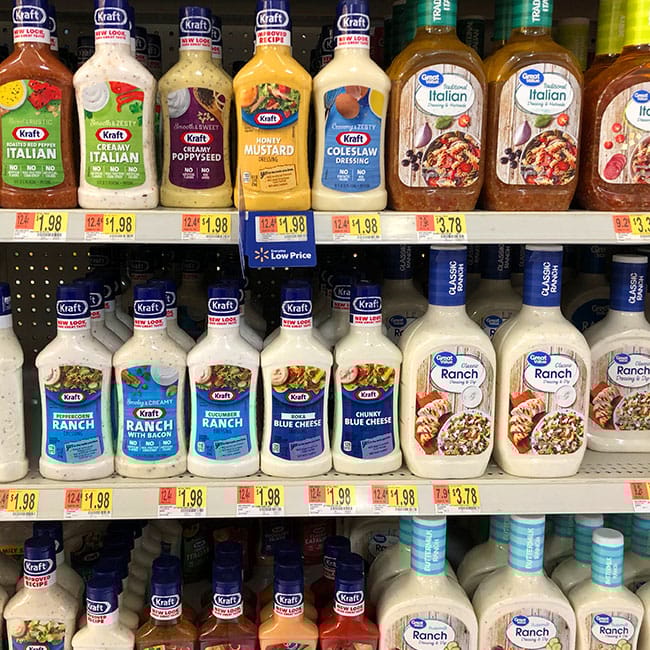
According to nutrition experts, sugar and high-fructose corn syrup (HFCS)—hidden in many store-bought salad dressings—can wreak havoc on your digestive system. And one of the biggest offenders? Sweet poppy seed dressing.

Struggling With Sleep? This Rechargeable Sound Machine Is A Total Game-Changer

Avoid High-Sugar Salad Dressings
"This dressing may be tasty on salads, but it often contains large amounts of sugar or even high-fructose corn syrup, leading to a rapid increase in blood sugar levels," notes Elizabeth Keller, MS, CNS, ACSM-PT from Well Choices.
When consumed regularly, these added sugars can disrupt the delicate balance of bacteria in the gut, contributing to inflammation, poor digestion, and even long-term health issues like insulin resistance or metabolic syndrome.
Many sweet poppy seed dressings contain upwards of 6 to 10 grams of sugar per serving—and that’s just one or two tablespoons. The problem is that sugar doesn’t just spike your blood sugar temporarily—it can feed harmful gut bacteria, crowding out the beneficial microbes that help regulate digestion, mood, and immune function.
What’s more, HFCS—often used as a cheap sweetener in processed foods—has been linked to increased gut permeability (aka “leaky gut”), which can trigger immune responses and promote chronic inflammation.

How to Choose a Healthier Option:
If you love the tangy sweetness of poppy seed dressing, consider making your own at home using natural sweeteners like honey, maple syrup, or mashed fruit, and healthier fats like olive oil or avocado oil. Always check the label when buying store-bought versions—look for dressings with no added sugars and simple, whole-food ingredients.
In the end, even the healthiest salad can be undone by what's on top. Being ingredient-savvy is key to keeping your gut happy and your health goals on track.