




Around this time of year, sleep is super important, as we prep for the holidays, deal with daylight savings, and more.
Many people do not realize that not only do some of their lifestyle habits have an impact on their sleep quality, but so does their diet. Diet and sleep are closely related, as the foods we eat can make or break our sleep at night, and some foods can lead to being unable to sleep through an entire evening. We spoke with health experts about four nighttime snacks you should avoid if you want to get a good night’s sleep. Read more about them below.

Struggling With Sleep? This Rechargeable Sound Machine Is A Total Game-Changer

1. High-Sugar Desserts
There are numerous people who can't see themselves getting through the night without some kind of dessert. While there are healthy sweet options out there, and eating an indulgent dessert every once in a while is fine, consistently consuming sugary desserts like cookies, candy, brownies, and more before bed can set you up for bad sleep.
"Foods high in added sugar can cause a rapid rise and subsequent drop in blood glucose," notes Dr. Bronwyn Holmes, MD, with Eden. "That blood sugar swing can trigger a stress response, raising cortisol and prompting nighttime awakenings."

2. Spicy Food
Believe it or not, eating spicy food can end up making a big impact on your sleep. And it doesn't necessarily have to do with the tingle on your lips or the zap of energy you might feel when you eat them. It actually has to do with your digestive system.
"Hot spices can irritate the digestive system and cause reflux," explains Dr. Holmes. "Acidic or spicy meals can increase sympathetic nervous system activity, making it harder for the body to transition into a calmer state."

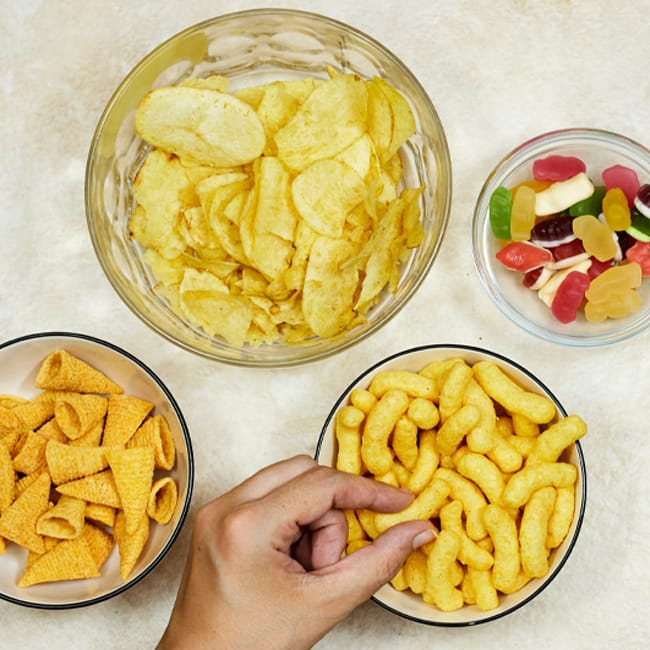
3. Chips & Processed Snacks
This is one of the hardest categories of foods to resist nowadays, especially at night, since we're living in a food climate where our grocery stores are packed with processed foods like chips, crackers, protein bars, snack mixes, etc. However, Dr. Holmes notes that these are a prime example of "destabilizing" foods that can ruin your sleep, mess with your blood sugar, and even spike cortisol levels.
"These foods often combine refined carbohydrates, salt, and additives," she says. "They can lead to blood sugar instability and fluid retention, both of which make sleep more disrupted and less restorative."

4. Fast Food
When you're out late at night, road tripping, or simply in the mood for a late dinner, fast food is an accessible option, as many places are open during late hours. However, fast food is notoriously bad for weight gain and other bodily functions, including sleep.
"Eating high-fat and heavy meals, especially fast food and big red-meat dinners, can delay stomach emptying and increase reflux risk when lying down," explains Dr. Neelofer Basaria, a board-certified health and wellness coach."All of this is associated with more arousals and less restorative slow-wave sleep."