


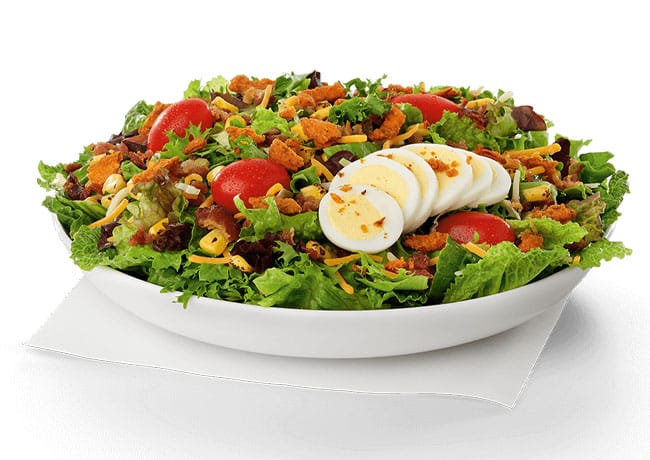
If you’ve ever glanced at Chick-fil-A’s menu and assumed the Cobb Salad is a safe, healthy choice, gut specialist Brendan McGuire says think again. Despite appearances, this salad may be doing more harm than good for your digestive system—and your overall health.
“This is the most unhealthy meal at Chick-fil-A,” McGuire says bluntly. “People look at a salad and think it’s healthy. Who wouldn’t, right? But looks can be deceiving.”
@mr_longevity The worst meal at Chick-Fil-A. #healthydiet #healthyliving #healthyfood #cleaneating #eatforhealth #dietadvice #nutrion #healthychoices #healthygut #microbiome #guthealth #guthealthmatters #healthfreak original sound – brendanmcguire4
Why Chick-fil-A’s Cobb Salad Is So Unhealthy
The Cobb Salad itself contains 2,200 milligrams of sodium, which is nearly the recommended daily limit of 2,300 milligrams. And that’s before you even add the salad’s creamy ranch dressing. With the dressing, the sodium content jumps to 2,650 milligrams—far beyond what most people should consume in an entire day. “This alone makes it a risky choice if you care about heart health or maintaining healthy blood pressure,” McGuire notes.
The chicken in the salad also raises red flags. According to McGuire, the Chick-fil-A chicken contains 60 different ingredients, including some that are particularly concerning for gut health. One such ingredient is polysorbate 80, an additive McGuire labels as a “carcinogen.” This emulsifier can interfere with good gut bacteria, trigger inflammation, and cause other changes in digestive function.
Adding to the concern is the use of yellow food dye, specifically Yellow #5 (Tartrazine), in some of the salad components. McGuire explains that this dye can contribute to mood issues such as depression, irritability, and anxiety. “It’s not just about the gut,” he says. “What you put into your body affects everything—from digestion to mental health.”

Struggling With Sleep? This Rechargeable Sound Machine Is A Total Game-Changer
The Bottom Line
Beyond additives, McGuire also warns about the long-term impact of eating highly processed salads regularly. “The combination of high sodium, artificial dyes, and emulsifiers isn’t something I would recommend eating every day,” he says. “It’s fine as an occasional indulgence, but if your goal is a happy gut, this isn’t the route to take.”
For those trying to make healthier choices at fast food restaurants, McGuire recommends being mindful of dressings, sauces, and processed toppings. “Everything in moderation is key,” he adds. “But when you look at the Cobb Salad, it’s clear that moderation doesn’t make up for the unhealthy ingredients hiding in plain sight.”