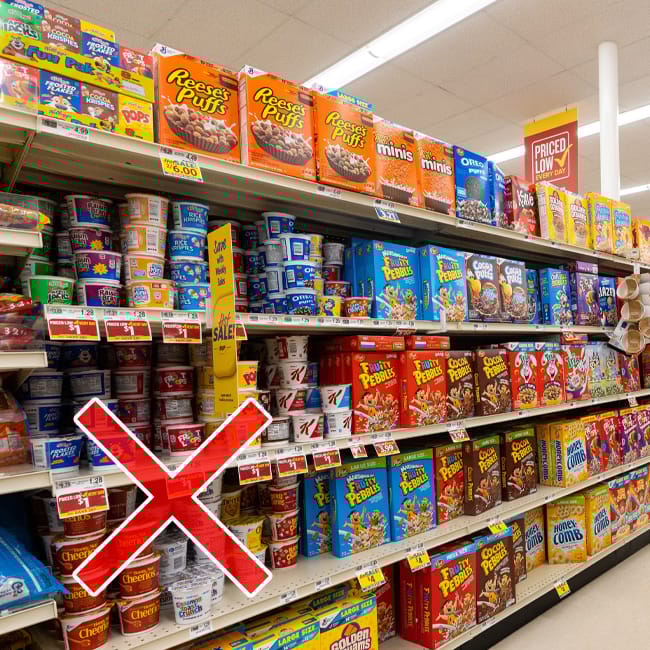



If you want to avoid weight gain and stubborn visceral fat, you’ve likely already cut out the obvious culprits like sugary drinks and fast food. But have you checked your freezer? Most of the popular frozen foods lining grocery store shelves are made to be as convenient as possible—not necessarily healthy. They’re rampant with coatings, seed oils, fillers, and sodium, all of which can lead to a slower metabolism and rapid fat storage.
Dr. Maria Knobel, Medical Director at Medical Cert UK, says she sees this firsthand with patients every single day. “I treat patients daily on swelling, weight trends and metabolic stimuli, and, hence, observe how certain frozen foods silently change the body,” she explains. Below, she breaks down the top frozen foods she urges people to avoid—and some healthier swaps.

Struggling With Sleep? This Rechargeable Sound Machine Is A Total Game-Changer

1. Breaded Frozen Chicken Nuggets
According to Knobel, frozen breaded nuggets are one of the biggest culprits of bloating, inflammation, and belly fat. "Frozen breaded products cause even more inflammation than one would expect and nuggets are on top of that list," she says. The main issue? Oxidized seed oils and starchy coatings.
She explains that a typical 10-piece portion contains "12 to 15 grams of seed oil which oxidizes in storage and which once oxidized gives the body a push to swelling and belly fat when reheated." On top of that, the batter spikes blood sugar quickly: "It is the starch coating then that elevates glucose rapidly thus propelling the liver to further fat storage."
Luckily, there are healthier options. "Unbreaded frozen strips of chicken with a basic seasoning mix do not touch that issue. High heat baking of them makes the fat stay more stable and eliminates the coating that typically contributes to inflammation," she says. Noted!

2. Breaded Frozen Fish Fillets
Fish is among the healthiest lean proteins. However, breaded, frozen versions are packed with sodium, fillers, and starches that work against metabolic health. Yikes! Knobel warns: "Fillets (breaded) contain more than 550 milligrams of sodium per serving and other additives to retain water in the batter."
For people prone to puffiness or fluid retention, this can be especially problematic. "The patients who have to contend with mild puffiness frequently report increased stiffness following such meals since that sodium draws additional fluid into the tissues," she says.
And just like nuggets, the thick breading drives insulin up, which is a major risk factor for belly fat. "The thick layer of starch pricks insulin worse than a bare fillet and that pricking stimulates abdominal fat in the long term."
So stick to those unbreaded fillets, she says. "An unadulterated frozen cod or haddock fillet lightly dusted with a teaspoon of olive oil takes the sodium nearer to 120 milligrams and prevents the coating that contains oxidized oils."

3. Frozen Stuffed Snacks (Like Cheese-Filled Bites)
We love frozen appetizers as much as the next person, especially when there's cheese involved. Hello, mozzarella sticks! Unfortunately, though, while cheese-filled, breaded, or stuffed frozen bites may be small, they can do some major damage to your metabolism. "In small quantities," she explains, "a serving of cheese filled bites is usually loaded with 9 to 11 grams of saturated fat with virtually no fiber to slow down the rate of absorption." That combination of high saturated fat and no fiber is particularly harmful for visceral fat: "The reality is that mix flows in the system too fast, something that promotes the development of visceral fat in a manifestation not felt by many patients until they notice a change in their waist." Say it ain't so!
A more stable option? Swap the bites for whole foods. "Roasted vegetables with a tiny cube of hard cheese would put the meal in a more stable energy and higher nutrient density without the heavy concentration of fat that breaks the long term metabolic regulation." And it's delicious!

The Bottom Line
The freezer aisle is a treasure trove of tasty, convenient options—but those delicious breaded, stuffed items are bad news for your metabolism and your weight loss goals. Oxidized oils, starchy coatings, and high sodium levels are likely to lead to inflammation, insulin spikes, and visceral fat. So stick to healthier options—your body will thank you!