



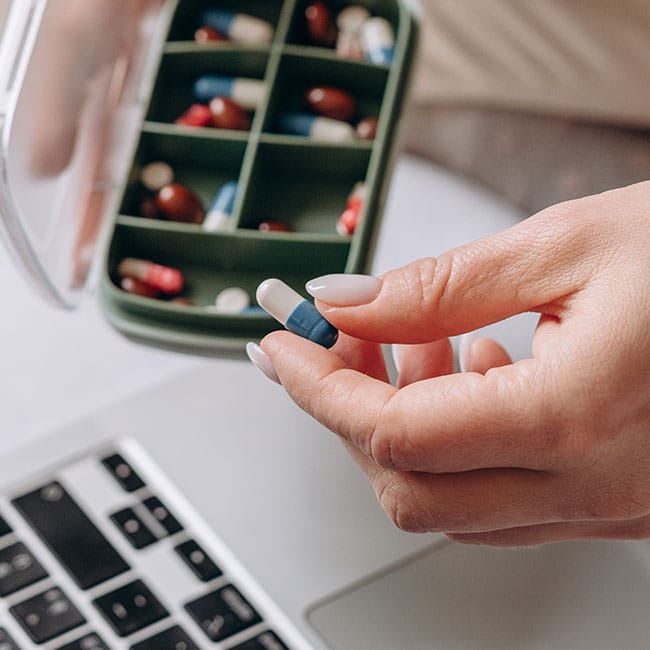
A lot of supplements promise a lot of benefits—from lower stress levels and better sleep to stronger bones and a healthier brain. While it can be tempting to load your morning routine with miracle cures, it’s important to remember that not only are many supplements ineffective, but they can also pose a risk to your health and safety.
Staying educated and aware of the risks of supplements is crucial. That’s why we consulted health experts like Dr. Peter Brukner, HaVy Ngo-Hamilton, Pharm.D., and Jesse Feder, RDN. They warned against popular choices like vitamin D, St. John’s Wort, and more. Learn more about the risks of each below.

Struggling With Sleep? This Rechargeable Sound Machine Is A Total Game-Changer

1. Excessive Vitamin D
Vitamin D is crucial for having healthy, strong bones, but if you consume too much of it, "it can make the level of calcium in your blood go high, which might be bad for health," says Dr. Brukner.
Furthermore, "When there is too much calcium in your blood, it can cause kidney stones and other big health issues. In the stomach area, high amounts of vitamin D can interfere with how the body takes in other nutrients, which might result in constipation or diarrhea." Noted!

2. High-Dose Omega-3 Fatty Acids
Most people take omega-3 fatty acids for their potential benefits for inflammation, heart health, and improving cognitive function. While these are all important, you should be careful not to take it in excess, especially if you're on blood thinners. "Omega-3s are usually very healthy, but taking too much can cause some problems. High doses might raise the chance of bleeding and could make your heartbeat irregular. They can also lead to stomach issues such as bloating and gas if you take large amounts," he notes.

3. St. John’s Wort
Dr. Brukner says “St. John's Wort is a plant-based supplement that lots of people use to help with depression and anxiety.” However, it’s important to know that it “can cause problems if you are taking other medicines at the same time.”
He adds that this supplement can interfere with other medications, “which might be risky. It also may cause your stomach to feel bad and give you diarrhea, making you feel worse if you're already having mental health problems.”

4. High-Dose Iron Supplements
Excessive iron has been linked to gastrointestinal problems like constipation, nausea, and abdominal pain. Over time, this can impact the liver, resulting in serious damage. While iron is important for overall health, taking too much of it can lead to health problems.
"Taking too much iron can lead to a problem called iron overload. This condition is not good for the liver and other organs in the body. It also might cause issues with digestion, like constipation and stomach pain. Also, having too much iron can disturb the balance of good and bad bacteria in your stomach, causing inflammation and other digestion issues," says Dr. Brukner.

5. Kava
Kava is a popular anti-stress supplement that many people consume in order to bring a sense of calm to their brain and body. "Kava, which is typically consumed as a tea, is a supplement known to promote relaxation," Feder explains. Unfortunately, though, this relaxation could come with a risk; "Consuming kava regularly has been shown to affect enzyme and antioxidant activity in the liver which can lead to liver damage." Yikes!
On top of this, kava could also pose a risk to your kidneys. "Kava may decrease blood flow to the kidneys and cause increases in harmful metabolites which can also damage them," Feder warns.

6. Excessive potassium
While potassium is essential for various bodily functions (including heart health) and a supplement can be helpful and perfectly safe in many instances, excessive levels can be detrimental—especially for those taking certain medications. "ACE (angiotensin-converting enzyme) inhibitors and angiotensin II receptor blockers (ARBs), approved to treat high blood pressure, may increase blood potassium levels by blocking aldosterone. Aldosterone is a hormone that is responsible for removing potassium through the urine," Ngo-Hamilton says, noting that "If you take any of these medications, you should avoid potassium supplements unless your doctor advises you to take them." Noted!


