


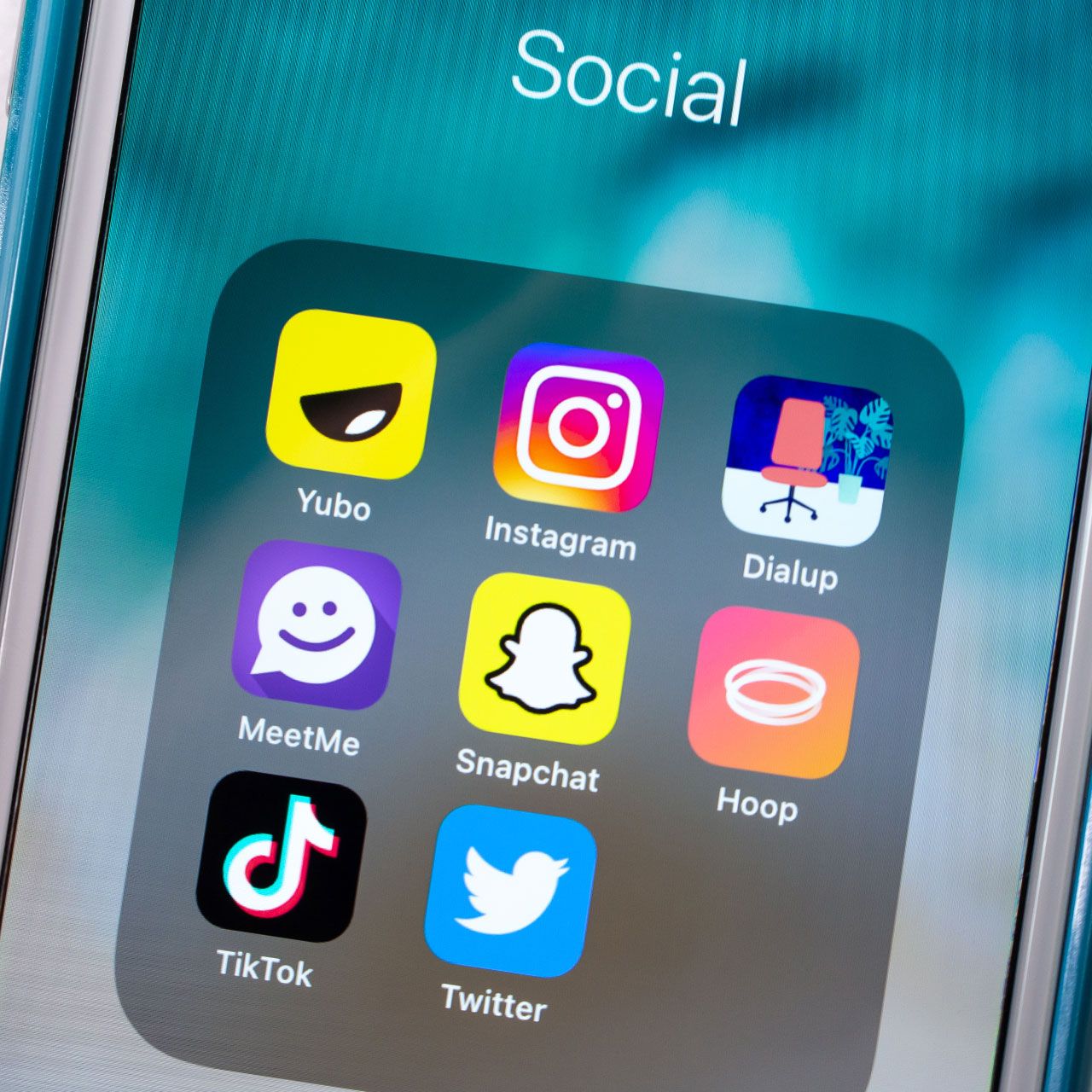
An app that we consider “dangerous” is any app that is more likely than others to collect tons of personal data, or one that isn’t transparent about what it does with that data and doesn’t take strong steps to protect your privacy. When it comes to figuring out which apps are the most likely to compromise your data and security, social media apps are right up there at the top of the list. These apps naturally collect and accumulate tons of data, and many sell your data to third-party apps to turn a profit, especially if they are free apps (most of them are free).
Play it safe, experts say, by avoiding these four apps altogether.

Struggling With Sleep? This Rechargeable Sound Machine Is A Total Game-Changer

1. Yubo
Yubo is a social networking app marketed for teens that claims it’s a great outlet for meeting other teenagers and sharing video and social content. While it doesn’t sound very different from any other app of this nature, this app collects a lot of data, including location data, profile information, photos and videos, and usage patterns. It can then use this data to personalize the user’s experience and send them targeted ads. Even though the app claims to take steps to verify a user’s age with facial recognition, questions have come up about the effectiveness of its age verification system and content moderation.
2. Discord
Discord is a messaging app that’s popular among gamers and others. In addition to collecting a lot of personal data, not all of the messages sent on Discord have end-to-end encryption — and group chats are not encrypted. There have been instances of accounts getting hijacked. Token grabbing, which is stealing Discord login tokens from your system, has been reported, and accounts with weak passwords that don’t utilize two-factor authentication are most vulnerable.

3. Snapchat
Snapchat collects tons of user data like location, photos and videos, contacts, and even metadata such as who you are chatting with and for how long. Your snaps and chats are not encrypted, and the app collects your biometric data, to boot.
4. Telegram
Even though many think of Telegram as a safer app for messaging contacts, the chats are not end-to-end encrypted, plus they’re stored on Telegram’s cloud servers. In other words, Telegram may be able to access your messages. Telegram collects metadata like your IP address, who you talk to, and the length of your conversations. Plus, your phone is exposed to other contacts. To limit this, go to Settings > Privacy and Security > Phone Number.