




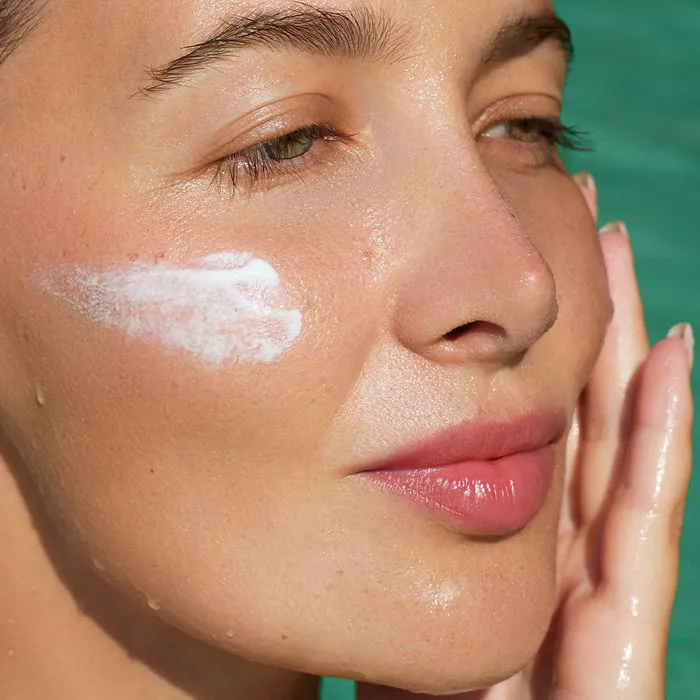
Most people know sunscreen is essential for protecting against sunburn and lowering the risk of skin cancer. But according to board-certified dermatologist Dr. Sam Ellis, its beauty benefits deserve just as much attention.
In a recent video, Dr. Ellis explained that sunscreen doesn’t just prevent future damage—it can actually improve the appearance of your skin over time. With consistent daily use, sunscreen may help fade discoloration, smooth skin texture, and reduce the visible signs of photoaging, making your complexion appear healthier and more youthful.
Here’s why dermatologists say sunscreen is one of the most effective anti-aging products you can own.

Women Are Swapping Their Boring Water For This Ice Pop Electrolyte Mix!

It Can Help Reverse Visible Sun Damage
"We as dermatologists don't talk about this fact enough," Dr. Ellis says. "Sunscreen is not just for prevention of sun damage, but consistent sunscreen use over time has actually been shown to reverse sun damage."
While sunscreen can't erase deep wrinkles overnight, it prevents new UV damage from occurring, giving your skin the opportunity to repair itself. By reducing ongoing exposure to ultraviolet rays, your skin can gradually recover from some of the damage that's already visible.
It Improves Skin Texture
One of the first changes many people notice after committing to daily SPF is smoother skin. According to Dr. Ellis, wearing sunscreen consistently can improve skin texture—even if you don't add any other anti-aging products to your routine.
UV exposure breaks down collagen and elastin, the proteins responsible for keeping skin firm and smooth. By protecting these structural proteins, sunscreen helps preserve a more even, youthful-looking complexion over time.
It Helps Fade Dark Spots
If you're dealing with sun spots or uneven pigmentation, sunscreen plays a critical role in helping them fade. Dr. Ellis explains that consistent SPF use can help dark spots gradually become less noticeable because it prevents UV rays from continually triggering excess pigment production.
Without daily sunscreen, even the best brightening serums or professional treatments can struggle to deliver lasting results.
Consistency Is What Matters
Perhaps the biggest takeaway from Dr. Ellis' advice is that sunscreen works best when it's used every single day—not just at the beach. "If you did nothing else but wear sunscreen consistently over a year," she says, "the appearance of your skin would get better."
For the best protection, dermatologists generally recommend applying a broad-spectrum sunscreen with at least SPF 30 every morning and reapplying every two hours when spending extended time outdoors.
The Bottom Line
When it comes to anti-aging skincare, sunscreen is one of the most powerful—and often overlooked—products available. Beyond protecting against future UV damage, daily SPF can gradually improve skin texture, help fade dark spots, and support a smoother, more youthful-looking complexion over time. While results won't happen overnight, consistency may pay off in ways that go far beyond preventing sunburn.